Meet Our Little One!

TW: This post details our NICU journey and the reason why our baby needed NICU. 

Following on from our birth story blog posts, it’s time to introduce our little one to you all, as well as what happened next! 

Our little miracle and fighter, Alice Frances Margaret, was born at 0710 on 21st August 2021, weighing 2480g. She came into the world face up, which meant the first of Alice’s many facial expressions we were greeted with was her extremely grumpy one which Alex managed to get a photo of. 
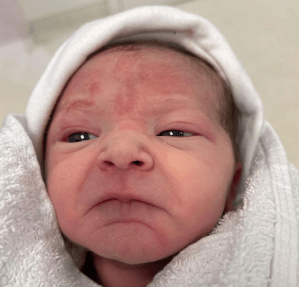
Alice, a small white baby with brown hair is wrapped in a white towel and wearing a white hat. Alice has various bruises from the forceps on her face and is extremely grumpy!
Alice at 23 minutes old!

Perfect in every way, I was so glad to get some skin to skin with her. However, my right arm had been severely affected by the epidural, which meant I couldn’t lift my arm or move it very well, so Alex and Paige, the midwife who took over from Sarah shortly after Alice was born, had to help me with holding her. All was going perfectly until 79 minutes after Alice’s birth. 

People always say expect the unexpected, but what happened at 0829 on that Friday, just 79 minutes after Alice’s birth, shook both Alex and me to our cores. It really was the worst moment of our lives so far, as Alice stopped breathing while on my chest, and we didn’t even realise it. I genuinely thought that Alice had fallen asleep on my chest. Even when I mentioned it to the nurse looking after us in recovery in search of reassurance, the fact that she didn’t respond made us both think it was ok. It wasn’t until Paige came back in 30 seconds later and realised what had really happened that all hell broke loose. 

Having your baby swiftly taken off of you and seeing medical staff resuscitate them whilst the emergency buzzer means more medical staff are swarming into help is something that neither of us would wish on our worst enemy. I honestly thought we’d lost our baby, and Alex was that focused on trying to see what was being done to Alice that one of the staff had to try and force him to come and comfort me as I was being pushed out of the bay to a different area of recovery. We had no idea at that moment in time if our baby would make it. The 15 minutes it took to find out the update was the longest 15 minutes of my life. It truly felt like hours. 

The doctor who came to give us the initial update on Alice happened to be one of the doctors who looked after my mum in 2013 when she was fighting for her life in ICU. The second he said Alice was breathing, I felt the most enormous wash of relief pour over me. It didn’t matter that they were still trying to stabilise her and that the neonatal team were transferring her to NICU at that point, she was alive, and that was all that mattered. 

Shortly after the initial update, I was transferred back to the labour ward, and Alex came with me. At this point, I was trying to process exactly what had just happened to us, but if I’m honest, my brain couldn’t take anything in. As soon as I saw my dad and he realised that Alice wasn’t with us, I burst into tears once more because I couldn’t get out exactly what happened and Alex had to tell him for me. It would be another 24 hours before my dad met his first grandchild, as our NICU had a rule that grandparents could only visit on weekends in the afternoon due to covid. Still, it was a lot more lenient than most NICUs in the UK. At the time of writing this blog post, some weren’t even allowing parents to visit their child/ren together. 

Soon we received another update from the doctors working on Alice, and with them came the news that our baby was finally stable but not yet out of the woods. One of us was allowed to go and see her, but I couldn’t push myself in my wheelchair, so I told Alex to go down and get lots of photos and videos for me until I could go myself. As upset as I was that we weren’t going together, I knew that Alex would be able to prepare me for when I finally got to see Alice. After Alex got back, we were moved to postnatal, so I sent dad home to get some rest before bringing the colostrum we’d harvested to the hospital. I was an absolute hot mess, so before going to neonatal myself to check up on Alice, Alex helped me get showered and changed. He then briefed me on all the rules and what to expect, but if I’m honest, nothing could have prepared me for what I was about to be wheeled into. 

Having a baby in NICU is something I wouldn’t wish on my worst enemy. Seeing your child so unwell and not being able to hold them is tough. Once Alex wheeled me down, and we’d both washed our hands, he took me over to Alice. She looked so unhappy, which make me shed tears once more. She was covered in wires, hooked up on oxygen and on fluids. Her incubator felt like this massive barrier; I couldn’t hold her or do skin-to-skin to comfort her. It was a far cry from how everyone expects the first few hours after giving birth to go. Thankfully, one of the nurses came over to ask if I wanted to put my hand in and comfort her that way, which I jumped at the chance to do. I felt awful for Alex, who couldn’t hold or touch Alice the entire time she was in NICU. It wasn’t until Sunday, when Alice was on transitional care, that he got to hold her for the first time since she’d stopped breathing 2 days earlier. On the other hand, I got my first cuddle on Friday night whilst being able to feed her. However, it was filled with anxiety as the position I had her in for feeding was the same position she was in when she’d stopped breathing 12 hours before. 

Alice, a small white baby with brown hair is laying on a pastel yellow and pink coloured patterned mat in an incubator. She is wearing a nappy as has oxygen prongs in her nose, a cannula on her right hand and various wires over her body. She looks very grumpy!
Alice in NICU

Although Alice was out of NICU after 40 hours, followed by 2 days on transitional care before going home, those 40 hours taught me so much about a world few know about. Being NICU parents really showed Alex and me just how strong we are, even if we doubted that strength before. Before going home, we managed to catch up with Paige, the midwife who literally saved Alice’s life and between her and the neonatal doctors got as much information as we could. Unfortunately, not all the questions were answered; we’ll never know the reason why Alice stopped breathing. The fact she did in the first place shocked even the team looking after us, especially as Alice had an Apgar score of 9 just 1 minute after birth and then a perfect 10 at 5 minutes. A few have asked us if my Group B Strep infection caused it or if the reduced fetal movements played a part, which again is something we’ll never know. However, although we were fully covered with antibiotics for Group B Strep, Alice’s infection markers were raised when checked, so she was placed on IV antibiotics for a few days as a precaution. Since we’ll never know what caused her to stop breathing, we have been warned it could happen again. It’s something I constantly hope doesn’t happen, but if it does, Alex and I both know how to resuscitate babies and infants thanks to work. 

September is NICU Awareness Month, and we’re so proud of our little fighter who made it through. We’re forever thankful to all the staff who worked on Alice and got her well enough to come home as quickly as she did. We’re also grateful for the support of Bliss, a charity here in the UK that provides information and support to parents of babies born premature or sick, as well as research into improving care and treatment.

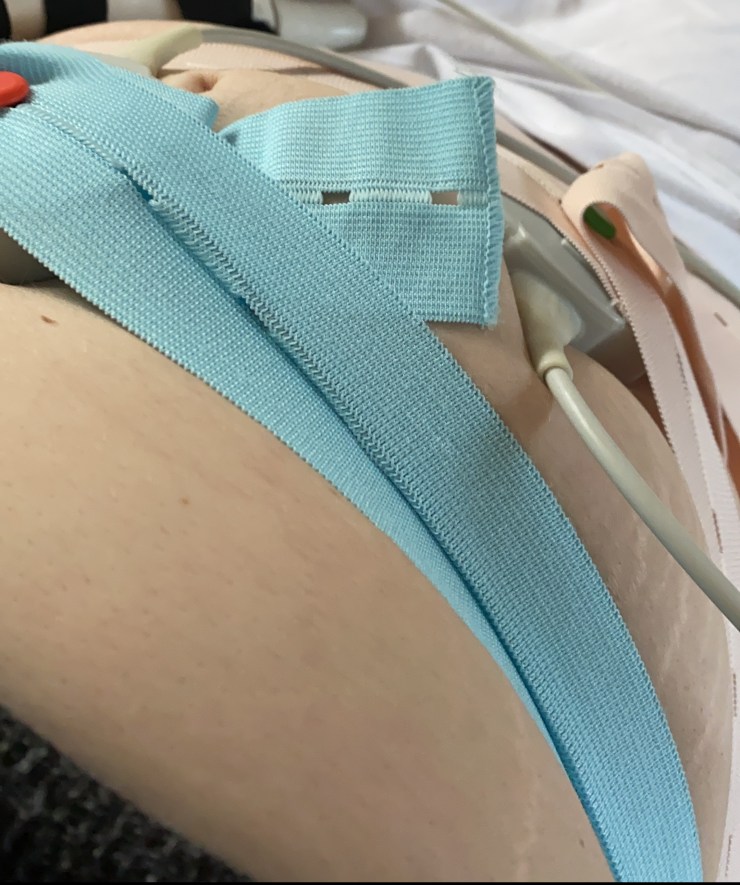
Alice, a small white baby with brown hair is wearing a white vest and laying on her back with her head turned to the side in her snuzpod, which has a white sheet with grey stars on the mattress. There is a grey blanket covering Alice and she is asleep.
Alice Now!

Our High-Risk Pregnancy So Far: 32 Weeks And Still No Plan!

If there were a list of posts that we hoped we wouldn’t be doing, this is one of them! I knew from the start that pregnancy wouldn’t be easy. Alex and I spoke about that fact in detail quite a few times, as well as about what we would do in set situations, but we never thought we’d get to a point where we have no plan so soon to little one’s arrival! 

Going through a high-risk pregnancy takes its toll, and with ours, we have another problem; high levels of uncertainty. Uncertainty around labour because I can’t feel movements (more on that subject here), uncertainty and worries around neonatal withdrawal and how my medication has impacted little one, and finally, uncertainty over whether or not my body will cope with physiological birth. The latter could be true for anyone. After all, no one knows for sure if they’ll get the birth experience they dream of, but we quietly hope that everything will go to plan and for our preferences to be fully respected and carried out without question. 

For me, I’ve been adamant from the beginning that when it comes to mode of delivery, I want a physiological birth if at all possible. So when I attended my first appointments with obstetrics and my midwife, I made a point of telling healthcare professionals that I want to try, even with the uncertainty around my body being able to cope. Here’s the thing with my EDS; it’s unpredictable, especially as my dislocations can happen at any given moment. I also have autonomic dysfunction, spinal involvement, and on top of that, we don’t know for sure what type of EDS I have. Although I found out in 2015 that I have EDS, until 2019, everyone assumed it was the hypermobile type. But when my thumb joints failed to the point of needing fusion and other symptoms began popping up, there were concerns that I have classic EDS and not the hypermobile type. So when I fell pregnant again and got referred to Silver Star in Oxford, doctors there decided to get me tested and find out once and for all if it is indeed classic EDS. This very bit of information will be the difference between me getting my way and getting the chance to have a physiological birth or having to go down the c-section route. 

Up until 26 weeks, the obstetric teams I’m under all agreed to keep an open mind. However, a swab I had done when I started spotting again picked up Group B Strep. It’s not an issue during pregnancy, but it’s a problem in labour or if waters go since you need to be on antibiotics as soon as possible to reduce the risk of passing the infection onto baby. It’s yet another complication we could have done without, as it’s further heightened both mine and Alex’s anxiety around labour and birth. It’s also left me worrying that even if I can have a ‘normal’ delivery, physiological birth could out of the question if the team eventually recommend that I have an induction. 

Why The Idea Of A C-Section Scares Me 

Let me start by saying that you have to do what is best for you and your baby, and no two birth experiences will ever be the same. For birthing people who choose to go down the c-section route, I fully respect your decision and know that it isn’t always easy to make. 

For me, many of the worries around c-section delivery are linked to past medical trauma, which I’m still working on processing. My EDS means that both local and regional anaesthetics are ineffective to the point that I’ve had to be put under general for surgeries where most could be awake. In one surgery last year, I had a failed regional, and my last memory before being put under was screaming in pain as the anaesthetic failed to numb my arm. I also had problems coming around from the general afterwards, which wasn’t ideal. Luckily, we’ve been able to speak to the lead obstetric anaesthetist at the hospital in-depth about this and other issues, including my long list of allergies! During our conversation, the anaesthetist we spoke to joked, ‘you’re not an anaesthetist’s best friend, are you?’ ‘No, I’m not, I’m a paperwork nightmare’ was my light-hearted reply. That conversation also highlighted other issues. However, we also had our minds put at rest over certain things. 

One of the other worries about having a c-section under general is that we were both put under the impression Alex would not be allowed into theatre for the birth. Usually, this is the case and was so even before covid. But we’ve been reassured that depending on who is the team on the day, Alex’s emotional state (good thing he’s crew) and that there are no emergencies involving myself or little one, he may be allowed into theatre for the birth. It’s something Alex is super happy about, and I’m just relieved over even if it isn’t for certain. Having my birth partner with me means having someone I know and fully trust to fight my corner and ensure my birth preferences are respected. This is especially true where delayed cord clamping and skin-to-skin contact are concerned (both of which I want regardless of delivery method). 

There’s also the worries around my recovery from a c-section. People forget that it’s major surgery with a lengthy recovery period! In my case, it means not being able to transfer myself for 6-8 weeks which means I’ll probably need to be on hoist transfers – something I heavily detest! A c-section recovery would also mean heavily relying on Alex, my dad and others since I’ll likely have to restrict how much time I can be in my wheelchair and up and about. I also take longer to heal, thanks to my EDS, so there’s the risk that the usual restrictions could last even longer. All of this makes me worry about how much I’ll be able to be involved in our baby’s care in those first weeks.

32 Weeks and still no plan

When I had my genetic blood panel done to find out what we’re dealing with in terms of my EDS, I was informed that the results would be the most significant determinating factor regarding what mode of delivery would eventually be recommended. There was hope we’d have them back at around 28-30 weeks, enabling us to get a plan in place and know what to expect. We also need to have an MDT meeting, where all the specialists involved in both mine and little ones care meet to discuss the way forward. However, we can’t have the meeting until the genetics are back, something that is starting to worry not just Alex and I, but my consultant, who is now chasing them up. 

We’re hopeful that by 34 weeks, we’ll have the results, the meeting and know what will happen. However, I feel disheartened and stuck in limbo. My birth preferences still aren’t complete because I don’t feel I can fully finish that off until we know what is going on. As we get further along, the possibility of going into preterm labour without a clear plan is not only becoming more likely as the days go by, it’s becoming more and more worrying! However, the biggest thing for me is that whilst there’s no plan in place, I’m holding out hope I’ll get the physiological birth I’m hoping for, even if others think that option is fading away.  

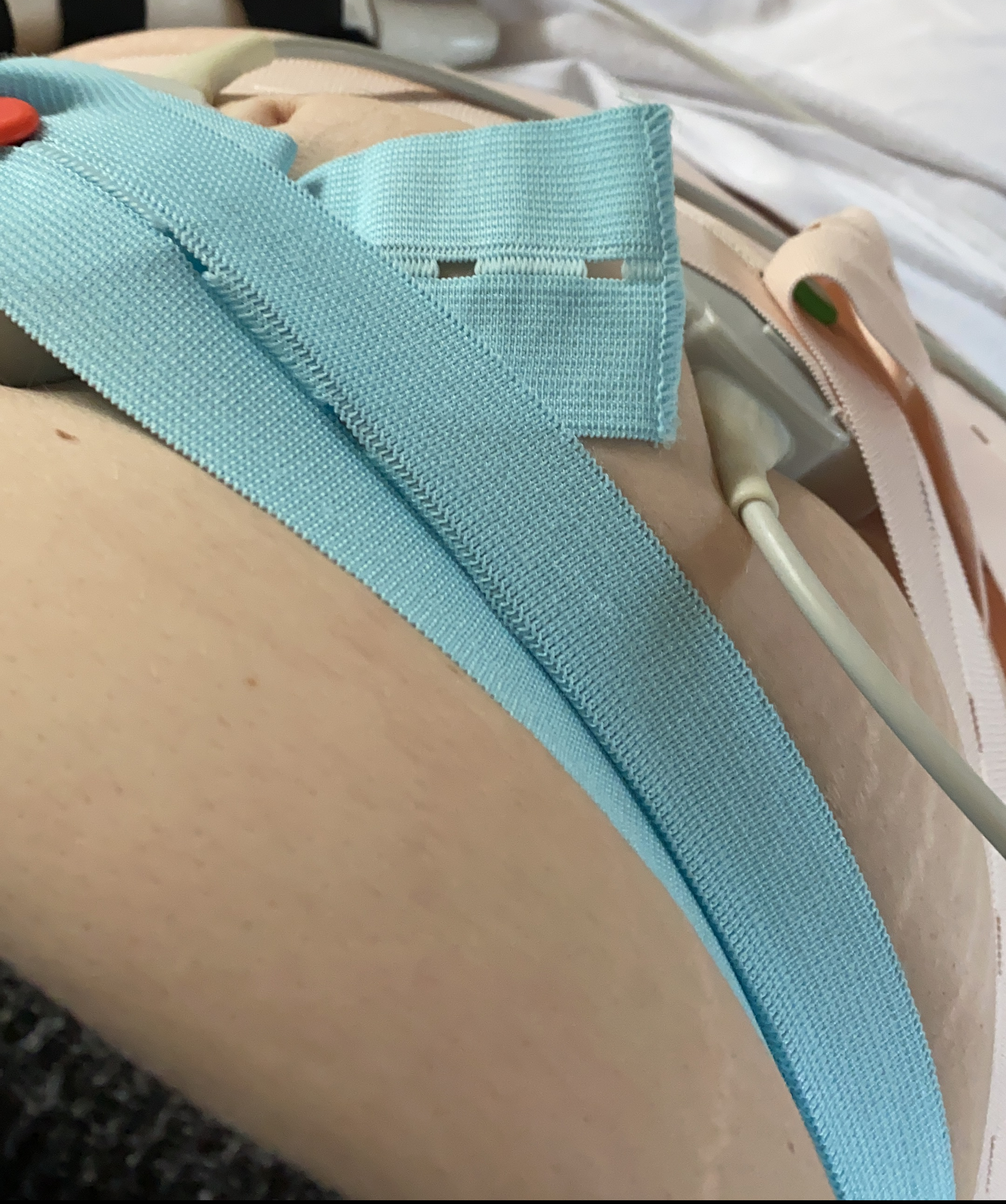
Photo of a white pregnant persons midriff, with blue and pink elastic bands holding 2 grey discs to the stomach area with grey colour wires going off to the right of the photo.

Our High Risk Pregnancy So Far: Movement Worries!

Firstly, this would have been a post about how things have changed between weeks 20 to 25, but that one will have to wait for a bit as one particular matter kept overtaking the majority of the post whilst I was writing – movements! 

To help people understand why I feel the way I do, we first have to talk about both how and why we track little one’s movements is a little bit unconventional. My condition means that from the top of my belly button down, I have no sensation and can’t feel fetal movements. The fact is that so far, the only time I’ve been able to ‘feel’ was last week when little one took one good swipe at my ribs and dislocated two of them! Because of my condition, Alex was the first to feel little one’s movements, and it’s something I’m super jealous over as it’s usually the person who’s carrying that gets to feel movements for a few weeks before anyone else can! 

So instead of going about my day whilst tracking them, my life has revolved around putting my hands on my stomach (Alex often joins in at home to cover more ground) every 90 minutes for 10-15 minutes each time since the day Alex felt bumps first movement. So essentially, we’re palpating for little one’s activity and seeing what they’re up to in there! It’s something I knew we’d have to do, but nothing could have prepared me for how complex tracking movements via this method can be since it’s only giving us a snippet of their routine. So imagine the panic we go through each time we don’t get anything when we are palpating. 

Reduced movements

The one thing that is drummed into you when you’re pregnant is to track movements, that they are how you know your little one is well, and that episodes of reduced movements should be reported to your hospital. Of course, there are plenty of varying opinions on how much activity is normal, but only you know your little ones routine.

For most, spotting reduced movements is pretty easy but for us, only being able to feel movements by palpating them means that it’s challenging to decide when to pick up the phone. My first episode happened just shy of 24 weeks, so I phoned my midwife, who quickly decided a trip up to the hospital was needed. Since then, I’ve had four more episodes of reduced movement, three of those being in the last week. The difficulty in knowing when to phone about movements is made more challenging, especially as when I’ve asked about when Alex and I should be worrying, none of those I’ve asked has a concrete answer, and the difficulties in monitoring don’t end there. 

CTG Nightmares

Photo of a white pregnant persons midriff, with blue and pink elastic bands holding 2 grey discs to the stomach area with grey colour wires going off to the right of the photo.
All hooked up to the CTG monitor

Anyone who’s had a CTG or knows what one is will probably know that there are set criteria you have to meet for the monitor to return a normal result. Unfortunately, it can be tricky for a CTG to produce a normal result between 26 and 28 weeks, from what various doctors have told us. However, my condition makes it even more likely for monitorings not to meet the criteria.

Firstly, having to palpate for movements is difficult when the monitors are one your tum! But it’s the only way I can feel movement, and when I do, taking my hand off to press the button linked up to the machine often interferes with the monitoring to the point that we’ve had a loss of contact on some occasions. 

Secondly, my heart rate tends to run high – something that not only does the monitor not like, but it’s resulted in the monitor thinking that it’s picking up little one when it’s my heart rate that it’s picked up. It’s often picked up pretty quickly, but when little one shifts away, the monitoring ends up picking up my heart rate again, which means a lot of moving the monitoring plates around! 

Not meeting criteria always means having to see the doctors before we can go home, and visits during pregnancy have become so regular that I’m on first name terms with half of them, especially as there were many hospital trips at the height of my battle with hyperemesis gravidarum. The silver lining is that my history doesn’t need to be explained as they already know about me, but it gets to a point where it starts to run you down, and no amount of people telling you it’s ok to be worried can stop you from feeling like you’re becoming a nuisance. 

Feeling like a nuisance

Even if it shouldn’t, going back and forth to the hospital for the same thing gets me down. But, luckily, most of the staff are extremely understanding of the rather unique situation I’m in, even if it’s not something that they come across on a day-to-day basis which I feel lucky for because I know that’s not the same for everyone.

However, there’s been one time where I have felt dismayed by the response I received when I told one of the midwives how I have to palpate for movement. Not only were they confused on the phone, but they also continued to be either confused at or not able to accept the fact that because I have no sensation from the top of my belly button down, I’m unable to feel movements when I was at the hospital. It wasn’t until the doctors saw me that they changed their attitude and realised that I was serious about how my condition affects my ability to track little one. 

Thankfully, since that incident, I haven’t felt disbelieved, but it’s left me feeling like a nuisance even more than I would’ve felt. I even said to one midwife in day assessment that I’m hoping my consultant can organise a plan of action regarding movements. I know the almost daily hospital visits to be monitored if little one gets into a position that makes it impossible to palpate will wear me down further and cause more stress. After all, the ongoing problems with tracking movement almost constantly remind me that I’m in a very different situation to most pregnant people.