Navigating Pregnancy When One Of You Is Intersex And The Other Is Trans

Firstly, Happy Pride! June happens to be our favourite month of the year, not only because it’s pride month, but our anniversary also happens to be today! Yes, we got together on the 28th of June, the same day as the anniversary of the Stonewall uprising. For the LGBTQIA+ community, it’s the month where we celebrate how far we’ve come thanks to those who came before us, but at the same time raise awareness that there is still much more to be done. Even in 2021, the world isn’t a safe place for everyone, especially when there are still countries in the world where being your true authentic self is dangerous. There’s also those in power who keep trying to take away our community’s basic rights, rights our elders fought for.

2021 for us is special though, it’s the year that we become parents and a family of 3. But being LGBTQIA+ parents is far from easy. The journey to parenthood has been tough on us both. There have been moments of heartbreak with repeated miscarriages, and the system itself is full of red tape and discrimination. In addition, it’s been exhausting having to deal with people who don’t understand what we’ve been through, which is why for us, it’s so important that we’re visible, not only to challenge the outdated views and myths that you can’t have children if you’re intersex or transgender, but also to provide hope to other LGBTQIA+ people who want to become parents themselves. This year, we’re honoured to be part of The Positive Birth Company’s #ProudParent campaign, sharing our story alongside some other amazing LGBTQIA+ parents and parents-to-be, and you can read all the stories here.

Being LGBTQIA+ in a maternity/pregnancy care environment throws a whole host of emotions at you. So often misunderstood, Alex and I were extremely guarded and protective of each other until I met my community midwife, who, with her compassion, empathy, and determination to get it right, broke down every single barrier in the space of two hours. Unfortunately, she left when I was 16 weeks, but our new midwife is just as caring and empathetic, and it’s meant that we’ve felt welcomed, included but above all, safe. How did they manage it? By asking open-ended questions, not making assumptions, and giving us the time and safe space we needed to open up. It takes a lot to trust someone in the medical profession when you’ve been subjected to medical trauma in the past.

For me, my medical trauma started as a young child. Put on hormones at just 9 years old because my body didn’t ‘conform’ to the not so lovely little tick box that doctors have. I struggled with body image, being bullied and even comments from some family members regarding me being on hormone replacement therapy. When I moved in permanently with gran at 14, one of the first things she did was attempt to get me off the hormone tablets that I didn’t want to be on. We went to the doctors, only to be told that it was in my ‘best interests’ to stay on them despite horrific side effects, mood swings and further down the line, a blood clot. Intersex kids are seen as medical emergencies, our bodies over-medicalised and decisions on surgeries, hormones etc., made before we’re even old enough to voice our own opinions.

For Alex, on the other hand, it was a case of not being believed by healthcare professionals. When Alex first went to ask his GP to refer him to the GIC, he was told he needed therapy instead (he didn’t). That wasn’t the only issue; once the GP finally did the referral, rather than changing gender markers and details on his record, they completely deleted his old NHS record and set up a new one. It meant that vital medical history was deleted, putting Alex at risk, and even now, any medical problem he has is often blamed on his hormones rather than actually investigated. It’s resulted in Alex becoming so guarded that we’ve often gone to walk-in for medical attention instead of the GP. The only time he now goes to the doctors is for blood tests and testosterone shots, as these are handled by the nurses with who he has a better experience.

We had this conversation about our struggles with healthcare professionals a while back, and a few things became super clear. Firstly, those who stop trans people from accessing the healthcare and referrals they need are often the same ones dishing out hormones to intersex kids causing irreparable damage. Secondly, those in power trying to restrict trans healthcare are often the same ones who allow doctors to perform cosmetic surgeries on intersex kids before they’ve even been able to voice their opinion. Not only is it hypocrisy at its finest, but it’s a massive issue because cosmetic surgeries on intersex kids are irreversible and come with lifelong consequences, especially when they’re performed before the child has even had a chance to explore their identity and tell the world who they are.

Back to our journey to parenthood, and as you can probably already tell, my decision to be the gestational parent wasn’t an easy one. Alex would never even contemplate carrying, so we knew straight away that if we were going to do this, it would be me doing the carrying. So naturally, I felt excited but nervous because of my past experiences. However, I found focusing on the end and having our bundle of joy helped me through the appointments and hormone courses.

What no one prepares you for, however, is the heartbreak of pregnancy loss. The one in 2019 shattered me, and my mental health took a massive hit. It’s difficult enough to deal with miscarriage alone, I was away with work at the time, and Alex was working as well, so he couldn’t come on this trip with me. No one on the trip knew I was pregnant. We’d all been at pride the day before, and my excuse for not drinking was that I was on antibiotics at the time. Not a complete lie, as I actually was! But it meant that when I realised I was miscarrying just before boarding the flight, I didn’t feel able to tell any of them. I took the flight, got to the hotel, checked in and then made an excuse as to why I wouldn’t go shopping before making my way to the hospital. From there, it was confirmed that I was miscarrying. I had Alex on the phone in a panic and feeling guilty that I was going through it alone, but nothing could’ve prepared me for the lack of empathy and support from one of the nursing staff. When they looked through my notes, realised I’m intersex and had repeated miscarriages, they took it on themselves to tell me that they were surprised I’d even gotten pregnant in the first place and that Alex and I should look at other options. Anyone who’s suffered miscarriage or baby loss will know that it destroys you inside. To have that comment thrown in the mix sent me to an extremely dark place. It was the very thing that caused both Alex and I to become guarded about what we shared and whom we shared it with regarding maternity care after breaking down the walls we’d previously had built up from our individual experiences with healthcare professionals.

Back to now, and to be so close to meeting our baby fills us with joy, hope and a sense of achievement. Joy because we knew that one day, we would become parents; it was something we’d spoken about early on. It was just a case of when would be the right time not only work-wise but also allowing a new team of healthcare professionals into our lives when we’d both had previous bad experiences. Hope for the future, that the world is a more welcoming place and more progress is made, so that future generations don’t have the same struggles that we do now. Finally, a sense of achievement in that my body isn’t a failure, and we’ve proven the person who made that shocking comment almost two years ago wrong. Being intersex or transgender doesn’t exclude you from becoming a parent; we’re living proof of that fact along with many others.

Why We Aren’t Throwing A Gender Reveal

There’s no better feeling during pregnancy than finally getting over the halfway mark! There’s just something magical about having the 20-week scan and the sense of reality that comes with it. It also marks the point where the planning and preparation for your little bundle of joy gets into full swing. Except for us, we’re not thinking about whether to paint the nursery pink or blue. The fact is, we’re not focusing on the gender of our baby at all. 

Why? 

Well, there are several reasons. Firstly, I’m living proof that what a scan says regarding gender isn’t always true. My mum has an ‘It’s A Boy’ teddy bear with quite an interesting story behind it (embarrassing for the person who got it, though!) Why? Because my parents thought they were having a boy after being told what they thought was my gender on a scan, and then found out I wasn’t a boy when I was born. Ok, the 1990s didn’t have the best ultrasound machines, but you can see why you shouldn’t rely on your scan results. My body produces too much testosterone, and, as a result, I have a lot of masculine features like excess hair (especially face and neck!). Upper estimates suggest that 2-3% of the world’s population are intersex like myself. That’s about the same number of people born with red hair, so it’s not as rare as people are lead to believe, and yes, intersex people can and do have children!

There’s also the simple fact that gender and genitalia are two different things. Those who have found Family Of Wanderlusters through my travel blog, Instagram or YouTube channels, or through Alex and I sharing our story via The Positive Birth Company for Pride will already know that Alex is transgender, and he is very much of the opinion that colours and clothes should not be gendered, which I agree with! Will our child be brought up entirely gender-neutral to enable them to explore their own identity as they grow? I wish we could do that, but the world is so gendered that all we can do is show them that toys, clothes, activities, colours etc., are not gender-specific. If they want to play with lego? Then they can. Want to play football? Go ahead. Want a dolls house? Then we’ll get them one. Wear dresses? Fine. You get the picture.

For some in the intersex, transgender, and non-binary communities, gender reveals hurt. They reinforce the idea that girls like pink, wear dresses and play with dolls and makeup and need to be wrapped up in cotton wool, whilst boys like blue and play rough, which certainly isn’t the case. Not only does it reinforce dangerous stereotypes surrounding gender, but it also erases those who are intersex and reinforces the idea that we don’t exist along with those who are transgender, non-binary or gender non-conforming. Let’s face it, they aren’t gender reveals, they are genital reveals, and frankly, children shouldn’t be treated differently based on what’s between their legs. 

Last but not least, on top of reinforcing gender stereotypes, gender reveals also have an environmental cost. There have been instances where these reveals have caused wildfires, explosions, and worse, affecting biodiverse ecosystems for years to come. There are also news articles online linking them to deaths when the reveals have gone horribly wrong, and nobody wants that on their conscience. 

Let’s face it, we’re in 2021, and frankly, the outdated practice of throwing a gender reveal party needs to stop. As for those who have gender reveals just to celebrate their bundle of joy, that’s what baby showers are for, and you can easily have a gender-neutral themed one to do just that! 

10 Hospital Bag Must Haves (And 5 Things You Don’t Need)

There are many moments of pregnancy that make the journey memorable. From going shopping for baby items to setting up the nursery and getting your scans, all of these moments mark how close you are to meeting your bundle of joy. But, of course, one of the most significant moments is starting your hospital bag! But when it comes to your bag and what to pack, there are many different opinions on what you need and what you don’t.

The threat of early labour, an array of complications and a generally very-high risk pregnancy meant that from 20 weeks, I was researching what to put in my bag, and now at almost 29 weeks, it’s complete. So these are my following must-have items, as well as those you don’t need based not only on recommendations but personal preference, and the experience of having already been up on labour ward more times than I care to count!

First things first – your bag!

What you do for your hospital bag is up to you. Some people like 2 bags, either one for them and one for baby, or one for labour and one for after. Others, like me, shove everything into a case! If you’re like me and choosing the latter, a hard-shell case with separate compartments and an inbuilt lock is highly recommended! Not only do you then have the ability to split your case, but you can also keep it locked when it’s not being used. Cases like these are also great to use packing cubes with, giving you even more options for separating items however you need to.

What to put in (and what you can leave)

Everyone knows the basics of the hospital bag – nappies, car seat, clothes etc. But here I’m going a little more in-depth with 10 things I’m popping into my bag and 5 that I’m choosing to leave out!

Must-haves:

  1. Maternity towels and breast pads – I’ve seen people say that you don’t need breast pads; however, if you’re leaking milk, then I’d definitely pack some! Although I use my Elvie Catches at home, they need cleaning and regularly sterilising, so if you are using products similar, then leave them out and just get some disposable ones for the bag! Maternity towels are also a must, as regardless of how you have your little one, you will bleed after!

2. Isotonic drinks – Can we rename these to lifesavers!? Drinks like Lucozade sport will keep your energy topped up and stop you from getting dehydrated during labour, especially if you’re unable to eat! If you have gestational diabetes or need to watch your sugar levels, they also do a ‘lite’ version containing 10g of carbs per 500ml bottle.

3. Snacks for you and your birth partner – If you’re like me and having to pack for every scenario, then enough snacks for your birth partner and yourself is a must! Some hospitals are still strict on birth partners leaving the room to get food, so plan ahead. I’ve got snacks for Alex that I know I won’t eat, as well as snacks both of us eat. I’ve also popped dried fruit in my snack bag for me, as that will probably be the thing I want most.

4. Cotton wool – This is so versatile! Not only can you use it to clean baby up if they poop before going home, but if you’re like me and use a cleanser that doesn’t require water, then you can use cotton wool to apply that and toner too.

5. Phone charger – The last thing you want to be doing when it’s time to get to the hospital is fighting with your phone charger, so plan ahead and pop a couple of cables and a plug in your bag! You may also want to pop a pre-charged battery pack in your bag as well, which is precisely what we’ll be doing! A 6ft cable is a good idea, as the plug sockets are often high up behind the bed in the hospital, making a standard 1m cable almost useless!

6. Button-front nightdress or PJs – However you decide to feed your little one, a button-front nightie will make life easier for you, especially if you don’t do hospital gowns! If you know you’re going in for a section, then I suggest nightdresses all the way to prevent PJ bottoms rubbing on your scar!

7. Simple going home outfits for you and baby – Emphasis on the word simple! You’ll be tired, in pain and just want the easiest thing to get on and off when the time comes to leave. My going home outfit is a simple black wrap-front dress and leggings, and our little one will be in a vest and sleep suit.

8. Towels – Yes, the hospital provides them if you ask, but if you have sensitive skin like me, you’ll want to take your own. One brand I highly recommend is Dock & Bay who’s ultra-fast drying towels are lovely on the skin, and they’re also perfect for travelling and beach days when your little one is

9. Cooling mist and a handheld fan – Take it from someone who’s spent more time on labour triage than they wanted to. Those wards are hot! An excellent cooling mist (I recommend this one from Beauty Formulas) is a must, as is a handheld fan that your birth partner can direct towards you when required. I’m not a fan of battery ones, so I have a large handheld fan from Daftboy, but get whatever works best for you.

10. Flip flops! I cannot recommend flip-flops enough, not only for moving around the ward but also for using the showers in the hospital. Find a pair that are easy to put on and pop them down the side of your bag so that they’re easy to reach.

Don’t need:

  1. Muslin squares Yes, they are lifesavers, but baby stomachs are tiny, so the chances are you won’t need muslin squares just yet. If you’re unexpectedly in for longer than a day or two, then you can get someone to bring a few up!

2. Baby wipes – Remember I said you need cotton wool? You can use that to clean your little one with water. Unfortunately, most baby wipes are too rough for newborn skin and can causes rashes. I’ve been advised to wait a week or two before we start to use baby wipes, and even then to use something like Water Wipes.

3. Thick blankets – hospitals are hot, too hot for thick blankets! The ward at my local hospital where I’m giving birth also happens to provide blankets, but if you’re that adamant about taking one in, then an extra-large muslin which you can use to swaddle or as a nursing cover will suffice.

4. Breast Pump – Even if you’re expecting to be in for a few days, your milk likely won’t come in straight away. Breast pumps are bulky, and believe me when I say this, you won’t use the pump until your milk comes in!

5. Books, magazines etc. Again, these you probably won’t use. If you’re that worried about getting bored, get the Kindle app downloaded on your phone or tablet (you can get a 30 day free trial of Kindle Unlimited here), pick a couple books you like and then you have reading material if you need it, without the hassle of taking up precious hospital bag space!

Do you have any must-have items or items you packed but never used if you’ve been through birth before? If so, then pop them in the comments for others to get an idea of what is and isn’t a good idea for the hospital bag!

This post contains affiliate links. This means that we receive a percentage of the revenue made from purchasing products when you click on a link. This does not affect you as the consumer or the price of the product or service. It is also not a paid for promotion or a collaboration/advert.

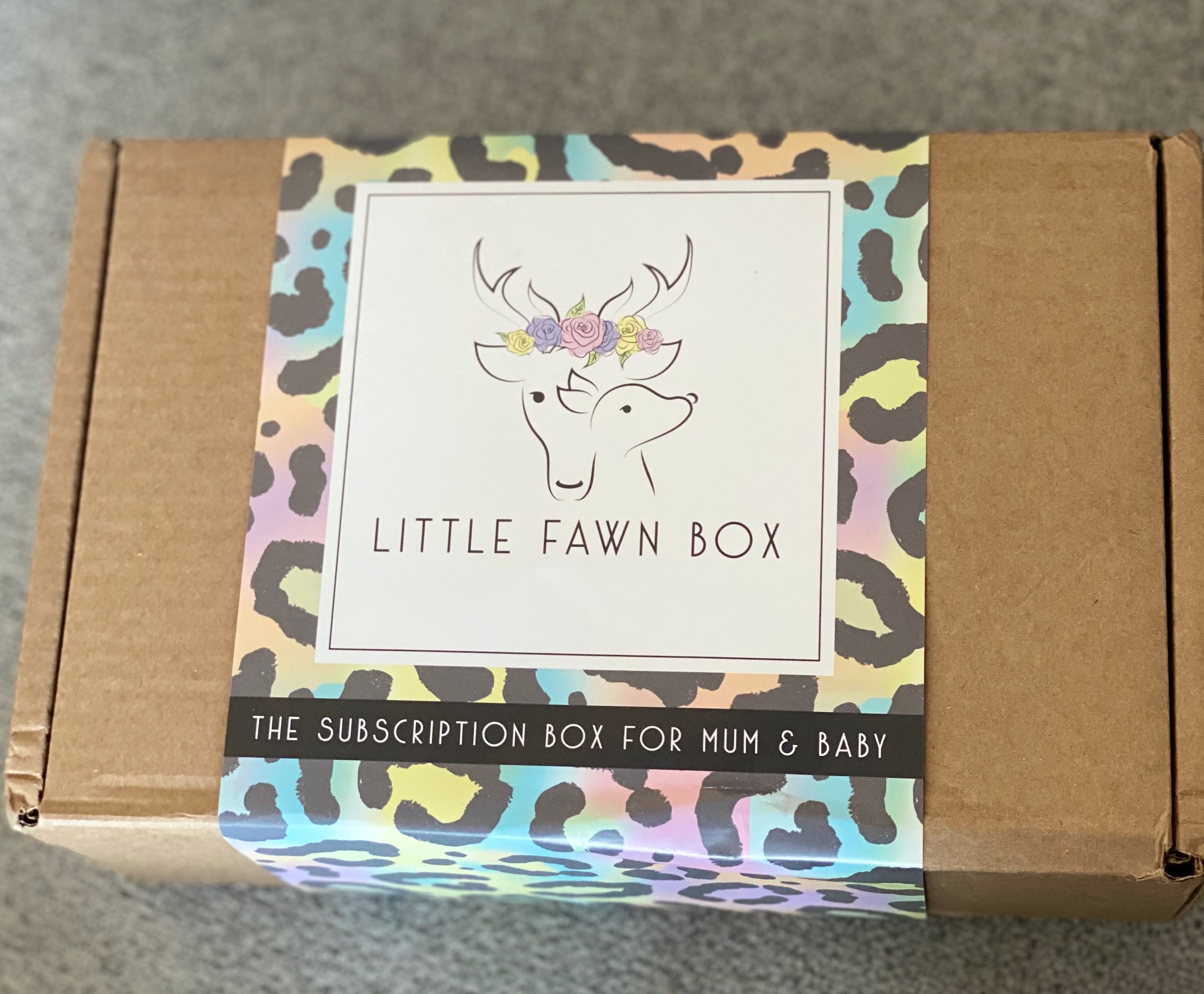
Photo of a brown box on a grey background with a multicoloured animal print sleeve wrapped around it. The sleeve also has a cream coloured square box with a drawing of a dears head with flowers one, and a fawn just in front of it. The words 'little fawn box' are in black underneath. There's also the words 'the subscription box for mum & baby' in cream on a black background underneath.

Parent And Baby Subscription Boxes – Are They Worth It?

Anyone who signs up to parent and baby sites like Bounty, Emma’s Diary or even just looks at Instagram or Facebook adverts will have probably seen that you can get subscription boxes for babies as well as parents. For those stuck on what to gift parents-to-be, they can seem like a great option, especially as you can find new products and they’ll usually have plenty of useful things inside.


One such box is Little Fawn Box which are boxes for parents-to-be and babies. I recently found a discount code for them which reduced the first box to £7.99, including postage. Usually, the boxes are £12.99 plus £2.99 postage, taking the total for each box to £15.98. You can also get 3-month and 6-month packages so that the boxes work out a bit cheaper. In addition, Little Fawn Box claims that all of the contents of each box are worth at least £30. So it works out at around a 50% discount by the time you’ve included postage.

Photo of a brown box on a grey background with a multicoloured animal print sleeve wrapped around it. The sleeve also has a cream coloured square box with a drawing of a dears head with flowers one, and a fawn just in front of it. The words 'little fawn box' are in black underneath. There's also the words 'the subscription box for mum & baby' in cream on a black background underneath.
How the Little Fawn Box arrives

The box itself is reasonably sized, and I really like the sleeve wrapped around the box as it makes the box itself less dull. In addition, I really like the design as it’s simple yet sleek, and the dear with the fawn is adorable!

What was in the box

Photo of various baby products including a cream and see-through baby bottle, multi-coloured baby rattle and cream and blue coloured bottle containing baby body wash. There is also a green box containing a cleansing bar, a rainbow coloured bath bomb, and a purple, cream and yellow box containing wardrobe dividers which also has an orange black and white tiger on. The products are arranged on and around a brown box which is on a grey background.
Our Little Fawn Box Contents
  1. MAM 130ml Ant-Colic Self Sterilising Bottle And Soother Set

I have so many of these sets from various freebies that I’ve managed to get hold of that I could probably start a small shop! However, I love the MAM bottles, and luckily, that’s what Alex and I have chosen to use with little one since they have a self-sterilising function which will be a godsend when we’re away travelling. The self-sterilising function also means we don’t need to worry about getting a bulky steriliser, which we have barely any room for in the kitchen! 

2. Lamaze Spin And Smile Rattle

I love that a sensory toy for our little one has been included in the box! This colourful rattle is a great size for little newborn hands and helps stimulate their vision, hearing, and touch senses. The smiley face ball moves independently of the rest of the toy to create sounds using the little balls inside, and the toy itself is excellent as a first teething toy for when little one reaches that stage of development!

3. Aveeno Baby Daily Care Baby Gentle Wash

I love travel-sized baby washes and was pleased to see this in the box as it gives us another baby wash option to try out with little one once they’re here. This 50ml gentle baby wash contains colloidal oatmeal for dry and sensitive skin and is specially formulated to reduce the risk of allergies – perfect for little one!

4. Belo And Me Safari Animals Wardrobe Dividers

If there’s one thing both Alex and I are guilty of, along with most other parents-to-be, it’s buying a large mixture of different sized clothes for little one before they’ve even arrived. We love a good clearance and will often pick bits up when shopping for other things, but organising little one’s clothes because of this has become rather challenging. Luckily, these wardrobe dividers will come in handy as they go from tiny baby all the way up to 18-24 months. Each coloured divider has a safari animal on it, giving little one something to look at and help them learn both colours and animals as they get older.

5. Oh K! S.O.S Foaming Cleansing Bar

This product highlights the slight dangers of getting a subscription box with allergies. My skin is very sensitive, and I happen to be allergic to tea-tree, amongst other ingredients found in many skin care products. Luckily though, this is a product Alex can use, so he’s delighted that he’s got something out of the box and hasn’t been left out! The cleansing bar includes a mesh bag for storage, and I’m told that the bar itself is great for treating breakouts!

6. Miss Patisserie Pride Bath Ball

It’s that time of year, and Pride month is just around the corner, so we were expecting that there would be a Pride-themed product in the box somewhere! I’m a big fan of bath bombs, and not only does this one from Miss Patisserie look lovely, but it also smells lush! I also really like that Miss Patisserie’s bath bombs are cruelty-free and suitable for vegans.

Thoughts

Overall, I really like most of the products in the Little Fawn Box subscription box. Not only are the products useful for both parents and baby, but you can see that thought has gone into the selection of the box contents. Of course, there is always a danger with subscription boxes that you run into the slight problem of receiving something you don’t like or can’t use; however, the Little Fawn box, in particular, is good value for money. We worked out that the box contents at the time of writing this post are worth over £45, which is much more than the £30 that Little Fawn Box claims the boxes to be worth.

Have you brought a Little Fawn Box? Let us know what you received and what your thoughts on the box are in the comments below!

This post contains affiliate links. This means that we receive a percentage of the revenue made from purchasing products when you click on a link. This does not affect you as the consumer or the price of the product or service. It is also not a paid for promotion or a collaboration/advert.

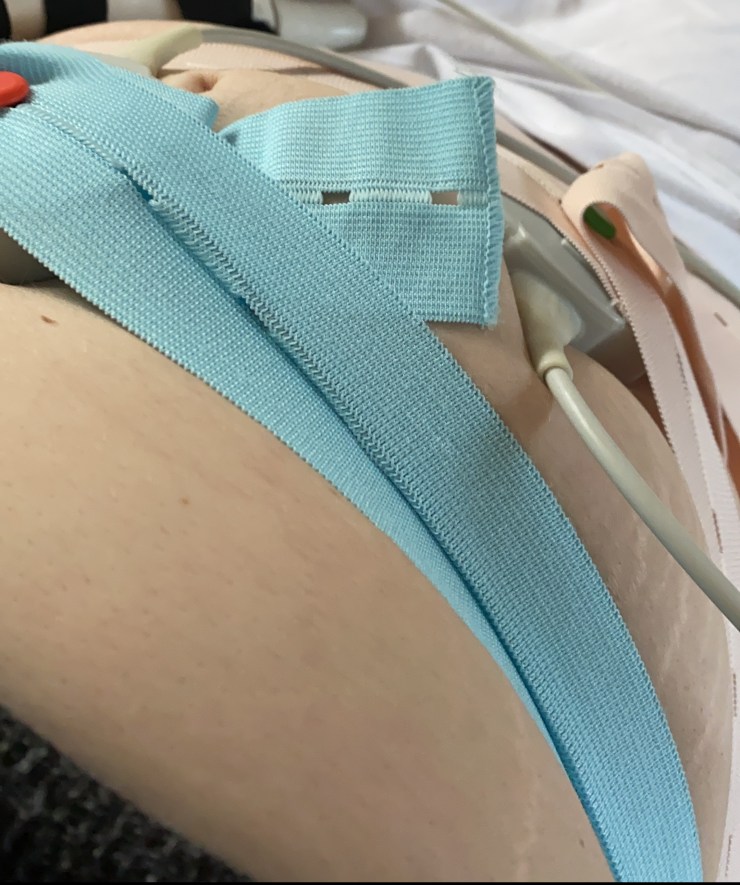
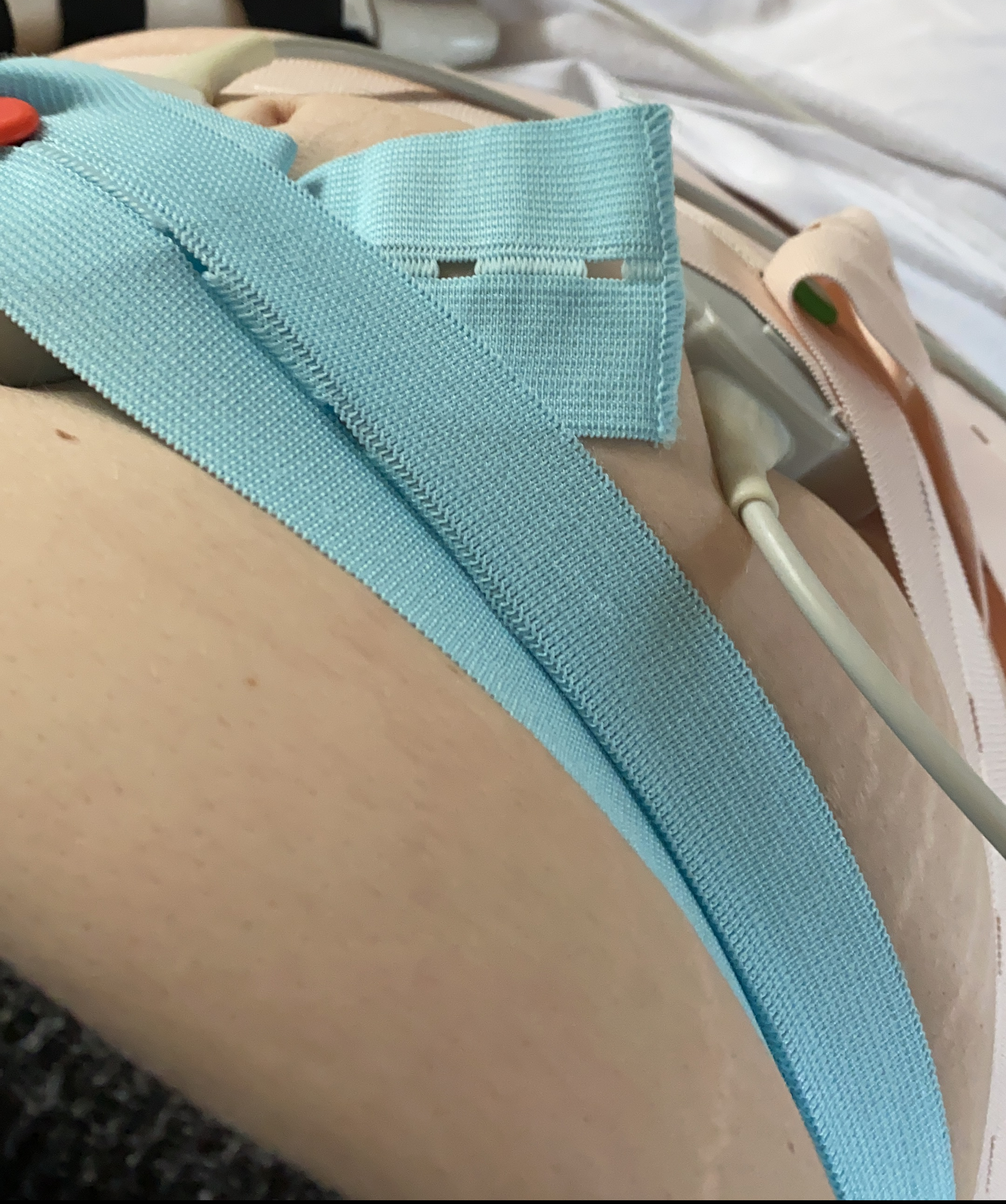
Photo of a white pregnant persons midriff, with blue and pink elastic bands holding 2 grey discs to the stomach area with grey colour wires going off to the right of the photo.

Our High Risk Pregnancy So Far: Movement Worries!

Firstly, this would have been a post about how things have changed between weeks 20 to 25, but that one will have to wait for a bit as one particular matter kept overtaking the majority of the post whilst I was writing – movements! 

To help people understand why I feel the way I do, we first have to talk about both how and why we track little one’s movements is a little bit unconventional. My condition means that from the top of my belly button down, I have no sensation and can’t feel fetal movements. The fact is that so far, the only time I’ve been able to ‘feel’ was last week when little one took one good swipe at my ribs and dislocated two of them! Because of my condition, Alex was the first to feel little one’s movements, and it’s something I’m super jealous over as it’s usually the person who’s carrying that gets to feel movements for a few weeks before anyone else can! 

So instead of going about my day whilst tracking them, my life has revolved around putting my hands on my stomach (Alex often joins in at home to cover more ground) every 90 minutes for 10-15 minutes each time since the day Alex felt bumps first movement. So essentially, we’re palpating for little one’s activity and seeing what they’re up to in there! It’s something I knew we’d have to do, but nothing could have prepared me for how complex tracking movements via this method can be since it’s only giving us a snippet of their routine. So imagine the panic we go through each time we don’t get anything when we are palpating. 

Reduced movements

The one thing that is drummed into you when you’re pregnant is to track movements, that they are how you know your little one is well, and that episodes of reduced movements should be reported to your hospital. Of course, there are plenty of varying opinions on how much activity is normal, but only you know your little ones routine.

For most, spotting reduced movements is pretty easy but for us, only being able to feel movements by palpating them means that it’s challenging to decide when to pick up the phone. My first episode happened just shy of 24 weeks, so I phoned my midwife, who quickly decided a trip up to the hospital was needed. Since then, I’ve had four more episodes of reduced movement, three of those being in the last week. The difficulty in knowing when to phone about movements is made more challenging, especially as when I’ve asked about when Alex and I should be worrying, none of those I’ve asked has a concrete answer, and the difficulties in monitoring don’t end there. 

CTG Nightmares

Photo of a white pregnant persons midriff, with blue and pink elastic bands holding 2 grey discs to the stomach area with grey colour wires going off to the right of the photo.
All hooked up to the CTG monitor

Anyone who’s had a CTG or knows what one is will probably know that there are set criteria you have to meet for the monitor to return a normal result. Unfortunately, it can be tricky for a CTG to produce a normal result between 26 and 28 weeks, from what various doctors have told us. However, my condition makes it even more likely for monitorings not to meet the criteria.

Firstly, having to palpate for movements is difficult when the monitors are one your tum! But it’s the only way I can feel movement, and when I do, taking my hand off to press the button linked up to the machine often interferes with the monitoring to the point that we’ve had a loss of contact on some occasions. 

Secondly, my heart rate tends to run high – something that not only does the monitor not like, but it’s resulted in the monitor thinking that it’s picking up little one when it’s my heart rate that it’s picked up. It’s often picked up pretty quickly, but when little one shifts away, the monitoring ends up picking up my heart rate again, which means a lot of moving the monitoring plates around! 

Not meeting criteria always means having to see the doctors before we can go home, and visits during pregnancy have become so regular that I’m on first name terms with half of them, especially as there were many hospital trips at the height of my battle with hyperemesis gravidarum. The silver lining is that my history doesn’t need to be explained as they already know about me, but it gets to a point where it starts to run you down, and no amount of people telling you it’s ok to be worried can stop you from feeling like you’re becoming a nuisance. 

Feeling like a nuisance

Even if it shouldn’t, going back and forth to the hospital for the same thing gets me down. But, luckily, most of the staff are extremely understanding of the rather unique situation I’m in, even if it’s not something that they come across on a day-to-day basis which I feel lucky for because I know that’s not the same for everyone.

However, there’s been one time where I have felt dismayed by the response I received when I told one of the midwives how I have to palpate for movement. Not only were they confused on the phone, but they also continued to be either confused at or not able to accept the fact that because I have no sensation from the top of my belly button down, I’m unable to feel movements when I was at the hospital. It wasn’t until the doctors saw me that they changed their attitude and realised that I was serious about how my condition affects my ability to track little one. 

Thankfully, since that incident, I haven’t felt disbelieved, but it’s left me feeling like a nuisance even more than I would’ve felt. I even said to one midwife in day assessment that I’m hoping my consultant can organise a plan of action regarding movements. I know the almost daily hospital visits to be monitored if little one gets into a position that makes it impossible to palpate will wear me down further and cause more stress. After all, the ongoing problems with tracking movement almost constantly remind me that I’m in a very different situation to most pregnant people. 

Photo of several small silver foil trays with white lids in a clear freezer drawer. The white lids have various meals and nutrition information written on them.

Batch Cooking: The Life Hack That Saves Both Time And Money

Almost everyone wants to save money where they can, but food budgets, in particular, can end up being stretched to the limit by our busy lifestyles. Most of us don’t want to be cooking after a busy day and often end up ordering in takeaway or eating out on the way home to save time and energy. But there is a way to save both money and time if you’re willing to spend a day or two a month batch cooking!

For both Alex and I, batch cooking has been a significant thing for us in our lives and even as a child, I used to spend some weekends batch cooking and baking with my gran, storing the food in our big freezer in the garage. With my condition meaning that I have a lot less energy than most and fatigue is a big part of my life, I’m glad that batch cooking is something I was brought up with and something that Alex and I really enjoy doing together. Not only do we batch cook his work food for onboard, but we also batch cook for standbys and for when I’m on a bad day with pain or fatigue. However, we’re now also batch cooking meals ready for when our little one arrives because we both know that we’ll have even less time on our hands to cook fresh meals.

So how does one batch cook?

Batch cooking is one of those things where people often don’t know where or how to begin. So aside from it being a good idea to have a big freezer if you’re doing a lot of batch cooking in one go, here are some other tips to help you get started.

Decide on meals you know that you’ll eat!

Firstly, I’m planning a detailed post on this in a few weeks, so look out for that. But the first thing you want to do is get a list together of meals you enjoy eating. It could be anything from cottage pie to lasagne or curries. The trick here is to see what works for batch cooking. You then want to think about how many portions to make at a time. You’ll need to think about freezer space for this as well, as you’ll be storing the meal portions in there until they’re ready to be used. After that, create your shopping list of ingredients you’ll need and how much, then you’re good to go!

Get containers!

If you do get takeaways, and they come in plastic containers, save them for batch cooking! If not, then you can buy microwave-safe plastic containers relatively cheaply online and reuse them. If you don’t have a microwave or, like Alex, you’re food prepping for work and only have an oven available, then foil trays are your best friend! Because we batch cook Alex’s work food at the same time, we tend to do both; plastic containers for the portions that can be microwaved and foil trays for meals that not only is Alex is likely to take to work but can be popped in the oven at home if we fancy them there as well.

Photo of several small silver foil trays with white lids in a clear freezer drawer. The white lids have various meals and nutrition information written on them.
Just one of our meal prep drawers in the freezer!

Get a whiteboard! 

A small whiteboard in the kitchen is a godsend! Not only does it help you keep track of what is in your freezer, but it also helps you plan in advance for when you next need to batch cook. It also stops us from ordering in or going to the shop unnecessarily when we can see what is in the freezer without physically looking. When you batch cook, write down what you’ve made and how many portions, then each time you take meal portions out, just edit the number on the whiteboard. It’s that simple!

Use leftovers for weaning! 

If you’re weaning your little one or starting in the next couple of months and find you have some leftovers that aren’t enough for an entire meal portion, you can make weaning portions out of them! Meals that work really well for this are curries, ratatouille, and pasta dishes. All you need to do is blend the leftovers and pop them into small containers (we suggest these ones as they’re microwave friendly and an ideal size for weaning portions)

Those are our tips for beginning to batch cook! If you have any extra suggestions on batch cooking, please leave them down in the comments below. Also, don’t forget to look out for our detailed blog post on how we make 25 meal portions for less than £20, which will be live in a couple of weeks! 

This post contains affiliate links. This means that we receive a percentage of the revenue made from purchasing products when you click on a link. This does not affect you as the consumer or the price of the product or service. It is also not a paid for promotion or a collaboration/advert.

Five Items We’ve Discovered That Will Be A Lifesaver When Little One Arrives

No matter what anyone says, planning for your baby’s arrival is a tough job! There are so many products out there, and everyone has their own opinion of what you do (and don’t) need. For me, there are more products on the market that are entirely unsuitable for our needs than those which are. However, there are 5 items we’ve found which, for us, will be a lifesaver when the little one arrives and may even be helpful for you!

  1. Snugglebundl blanket

If there’s one thing I’ve been worried about, it’s transferring our little one without disturbing them once they’re here. Anyone who’s ever tried to move a newborn will know they wake up the second you do it, which is precisely what the Snugglebundl aims to eliminate! This genius swaddle blanket comes with handles to make it easier to lift your little one without disturbing them. You can use this blanket to transfer them from car seat to carrycot or pushchair whilst out and about (the blanket is crash-tested), or as a hammock to rock them in and to keep them securely wrapped up and warm. It’s a great thing to have on hand if recovering from a c-section or other post-birth difficulties. However, as a disabled mum who has frequent joint dislocations, the Snugglebundl is something I’ve realised that I need regardless of what birth I end up having. The Snugglebundl will be getting used from day one to pick our little one up and move them about when needed, especially as it’s specifically designed to reduce the strain on the body from all the picking up!

2. Ergobaby Omni 360 Baby Carrier

Until we found out about this baby carrier during a virtual baby show, I was worried over whether or not we’d ever find a suitable baby carrier for both Alex and I to use with our little one. We already know that there will be days where I won’t have the energy or strength to push both myself and little one in their pushchair, and not all situations will be suitable for taking the pushchair with us. Alex also prefers the idea of carrying little one instead of using the pushchair. We’ll also be travelling a lot, which means a baby carrier has become a necessity. The problem with most baby carriers, though, is that they don’t provide enough support for my joints, or worse, not even being able to get it on myself!

The Ergobaby Omni 360 isn’t only great in that you can both forward and rear face in the carrier, making it suitable for toddlers and babies alike, but you can also back as well as side carry in it. The Omni 360 also has lumbar support for the person carrying little one and a lot of padding on the straps for even more comfort, something important to both Alex and I as we’ll be using it for prolonged periods when travelling with little one. The carrier is that good ergonomically that it has been classed as a hip-healthy product. The carrier also comes in a mesh material option, something we chose over the cotton option as we know it will be heavily used in warmer climates. Another plus is that if you’re one for going on days out, the carrier also has a detachable pouch for storing things like your keys, money, and phone. The carrier also has a privacy hood with UV protection, and you’re able to breast/chestfeed without needing to remove little one from the carrier too!

3. Changing backpack With built-in cot and phone charger

Continuing on with accessories for when out and about or travelling, changing bags are of course a must. However, most of them look too mumsy and obvious, whereas I wanted a changing bag which both Alex and I could use, and could also go on the back of my chair if I’m the one carrying little one. So a quick search for changing backpacks on Amazon led to me finding this absolute beauty. I’d seen one similar on Instagram in an advert but didn’t like the cost of it, so to see this one on Amazon made me very happy. Not only does it have a big main compartment for a change of clothes, snacks etc. It also has a bottle pocket that can store three bottles, a phone charging port (need your own battery pack) and a pocket for baby wipes! The most significant function for me, however, is the inbuilt cot and changing mat. Not only does it mean we can change little one with privacy if out and about somewhere without changing facilities, but they can also nap in it when travelling during the day, or have a safe play area when travelling as well. The cot also features a sun canopy for protection on sunnier days or as a barrier against the wind if using it when outside. It’s important to note that the inbuilt cot isn’t suitable for overnight sleeping, however, so you’d still need a travel cot if going away. However, I still think it’s a great bag, and the dimensions of it when the cot isn’t in use means that if you’re flying with little one, the bag will go under the seat in front of you.

4. Benbat Portable Booster Seat

For me, the highchair situation has been one of the most stressful things to tick off because they just feel impossible to use, especially as I’m a wheelchair user who is unable to weight bear. However, there is another option which if Alex didn’t know existed, I would’ve never have found out about it! A portable booster seat has similar functions to a highchair but is lightweight, great for travel so you can feed little one anywhere, and can be placed wherever it’s needed. The one we’ve found is from Benbat, and whilst it won’t be suitable until little one can sit unaided, it will be an absolute lifesaver once they can use it. Another thing I like about the Benbat is that not only is it portable, it also comes with storage compartments to pop some of little one’s bits and bobs in. This is great, as you can forgo the changing bag and pop a change into the storage compartment of the booster seat instead if going out locally.

5. Elvie Catch

If you are breast/chestfeeding or expressing milk, suffer from leakage, and don’t want to spend loads on disposable pads or lose milk that’s produced, then the Elvie Catch is an excellent investment. Not only are these collection cups good for catching let-down or leaks from the other side when pumping, but the Catch is also wearable and slip-proof, meaning that you can wear them for up to three hours at a time without worrying about any leaks. In addition, each cup can collect up to 30ml of milk and is easy to clean by hand or dishwasher. I’ve already started having minor leaks, so I have been using this as an excuse to get used to wearing the cups, and I can honestly say that I haven’t had any problems with them slipping when going about my day, even when I have been pushing myself around in my wheelchair!

Have you found any products that have been a lifesaver for you with your little one? Share them with us below!

This post contains affiliate links. This means that we receive a percentage of the revenue made from purchasing products when you click on a link. This does not affect you as the consumer or the price of the product or service. It is also not a paid for promotion or a collaboration/advert.

Waiting Until After The 20 Week Scan To Announce That You’re Expecting

If there’s one thing that some of you might be surprised by, it’s that we started this blog and our Instagram page to document our journey well before we had told all of our family. Believe it or not, as I’m writing this, some family members still don’t know that we are expecting our bundle of joy, bearing in mind that I’m almost 24 weeks pregnant!

We’ve had several things to overcome in terms of this pregnancy and life in general. Firstly, it didn’t feel right for us to announce our news right after our nuchal scan at 13 weeks because I’d lost my gran almost two weeks before my scan and her funeral wasn’t until three weeks after that! We’ve also had the covid restrictions to contend with, and there are certain family members we wanted to tell face to face because we know the news is likely to be hard on them.

We also have the ups and downs of a high-risk pregnancy to deal with. When you know that there’s a chance that there could be something wrong with your baby, or you have issues yourself from an early point, it can be challenging to get excited about expecting and wanting to tell everyone. Whilst most feel that after the first scan is a safe time to announce you’re expecting a little bundle of joy, we knew that it wouldn’t be until after that all-important anomaly scan that we’d feel ok about telling everyone.

Finally, we’ve just needed time to prepare ourselves for everyone’s reactions. If you’ve read our post on what you not to say to LGBTQIA+ parents, then you’ll know that we haven’t had the best responses to the pregnancy news. So getting back up and brushing ourselves off, ready to tell the following few people at a time, has been challenging because we’ve been worried about the responses, especially as ‘concerns’ over me being a disabled parent have been raised as well. Having said that, we’ve had more positive reactions to the news than negative, with some even questioning how we kept the news away from people for so long, despite going out and about as lockdown has eased, which brings me to my tips for those wanting to wait that little bit longer to tell people! 

Choose your clothes wisely! 

I was lucky that my bump is still small, to the point that even at 23 weeks, not everyone could tell I’m pregnant. However, I put this more down to my clothing choices. If you’re lucky enough like me to be approaching the 20-week mark in the spring or wintertime, then layers and baggy jumpers are your best friends. If you are trying to keep it secret for longer in the summer months, then patterned styles and long flowy dresses that don’t cling are your best bets. Avoid bodycon style dresses at all costs; even patterned ones can show a bump! 

Use accessories to hide your growing bump

This is a tip aimed more at those who are wheelchair users and one I’ve used a lot! Of course, having a bag on your lap can hide your growing bump, but for those who aren’t wheelchair users, even having a bag with a long shoulder strap so you can wear it in a crossbody style over your front will work. Long, flowy scarfs are also another good accessory to use, as they can break up an outfit and distract from your bump, as are long necklaces. 

I hope that gives you an insight into why we chose to keep our pregnancy news quiet for a while longer than most and how I managed it. If you’ve done similar, feel free to share your tips and advice in the comments for others to see! 

Five Things You Should NEVER Say To LGBTQIA+ Parents

Two things have unfortunately angered us over the last few weeks or so. First of all, someone in the family decided to share the news that Alex and I are expecting before we had a chance to tell extended family and friends. The second? Responses we’ve had all because we’re LGBTQIA+ parents to be on top of the fact that I’m disabled and pregnant. There are just things you NEVER say to disabled parents (see blog post on that here), and there are also things you NEVER say to LGBTQIA+ parents! The following list is not exhaustive, but these are all things that we’ve had to listen to from various narrow-minded people since a particular family member outed our news (which you don’t do. Period.)

1. Asking how we’ve had kids

Tip – none of your business! Fact is, there are many ways to have children. Families are created in many different ways, come in all sizes, and no two families are ever the same. Whether someone adopted, used a donor, had a surrogate pregnancy etc., is none of your business, and the intrusive questions aren’t welcome, nor is the calling out from such narrow mindedness.

2. Asking who the real parents are 

We are. End of conversation.

The fact that people even ask us this question gets to me, especially as it’s often asked at the same time people question how we’re having our child. People see parenthood as a very biological thing, but that will never be the case. It takes more than biology and being a donor to be a parent.

3. Asking if our children are or will be LGBTQIA+

We are not mind readers. We don’t have crystal balls, and we can’t see into the future. We can’t tell if our child will be LGBTQIA+ themselves, and guess what? It doesn’t matter, and it’s none of your business whether they are or not! After all, it’s not a choice. Right now, all that matters to us is that our child grows up to be happy, well-rounded, respectful, and as healthy as possible. No matter who they are, they’ll always be loved and accepted because they’re ours.

4. Assuming that our children will get bullied for having LGBTQIA+ parents

Just stop right there. Firstly, I like to think children today are more tolerant and accepting of each other compared to when Alex and I were in school. Also, when we were in school, LGBTQIA+ issues weren’t talked about, something that is now thanks to a requirement for schools to provide LGBT-inclusive education. I’m pleased about this, as it’s something Alex and I didn’t get taught at school, partly because of Section 28, which was finally repealed in England on 18th November 2003 when we were both in primary school. To assume that our child will be bullied just for having LGBTQIA+ parents is hurtful and something we’re hoping won’t happen.

5. Commenting that our children will miss out because of us

Miss out on what exactly? Our child will have everything they need to ensure they aren’t missing out on anything. Saying that they’ll miss out simply because of who Alex and I are is entirely disrespectful. You wouldn’t want anyone questioning your parenting ability or how you plan to bring your child up, so why would you question ours?

As I said initially, this list isn’t exhaustive, but it gives a little bit of insight into what we have to deal with, just because some can’t keep their noses out of our business. Even if it’s under the guise of being inquisitive, it’s not on.

Our High-Risk Pregnancy So Far

From the moment that positive test result shows, you imagine what the little miracle growing inside you will look like, what they’ll be like, their hobbies and interests, which parent they will be closest to etc. But what if you have a high-risk pregnancy?

Around 8% of all pregnancies are considered high risk. Most will have heard about gestational diabetes and pre-eclampsia. But some pre-existing medical conditions can get you placed in the high-risk category from the moment your GP or hospital are informed about your pregnancy! Luckily, I knew I’d be high-risk before I even got pregnant. However, for those who don’t expect to be told that they have risk factors at their booking appointment, the news can come as a huge shock.

So what should you expect if you have a high-risk pregnancy? 

I can only speak from my personal experience. However, you can almost certainly expect to be under consultant-led care. Exactly when you meet your consultant depends, but I met mine when I was 13 weeks pregnant. At your first appointment, they’ll discuss your risk factors with you, then make a plan regarding what you need from there. For me, things like starting Fragmin injections and high dose Folic Acid had already been actioned as soon as the local Early Pregnancy Unit confirmed viability at just over 5 weeks. But what I wasn’t quite expecting was to be told that I needed a referral to a different hospital this early on.

Referrals to a different hospital usually only happen if your hospital doesn’t have the specialists required. We had to be referred because I hadn’t had a maternal medicine consultation since 2017. Additional risk factors for referral included my medical and family history (we have a few congenital defects in our family). Luckily, it was to one of the best units in the UK, the Silver Star Unit at Oxford, and I can’t thank them enough for everything they’ve done so far. Not only have I now had a maternal medicine consultation with them, but we’re also under the genetics team for testing that needs to be done before I go into labour! Thanks to Covid, my Silver Star appointments have been virtual, but it’s meant that Alex has been able to be with me on the calls, as it’s something he likely wouldn’t have been able to attend if the appointments were face-to-face in Oxford due to flying schedules.

Thankfully, the lovely people at Silver Star have been advising our local hospital’s obstetrics team of everything that needs doing so that we don’t have to make the 120 mile round trip to Oxford. Luckily, the consultant at my local hospital had the majority of things recommended in place already: the anaesthetic referral due to local anaesthetics being completely ineffective, a GTT at 28 weeks, Fragmin injections and growth scans to keep a close eye on the little one. I’m also under a team at my local hospital who are experienced in dealing with high-risk pregnancies, meaning that I get the same midwife right up until I go into labour, and if not my midwife, then another midwife from that team will be with me during labour and delivery. The only thing that needed adding on top of the original plan was cervical length scans due to my pre-term labour risk.

As I get further into this pregnancy, one thing that will definitely be increasing is monitoring. Not just through growth scans, but no doubt regular checkups to listen to the little one. Unfortunately, due to one of my conditions, I’m not able to feel movement, so Alex and I have to palpate my tum for them instead. Interesting fact – Alex felt little one before me! We’ve already had one period recently of not feeling little one move for a while, which led to a triage visit, something that my midwife suspects will increase as this pregnancy progresses.

All in all, there aren’t too many changes appointment and monitoring wise with high-risk pregnancy until you get further along. Apart from my 13-week consultant appointment, 17-week growth scan, and two appointments with Silver Star, all my other appointments have been what you would expect in any pregnancy (booking appointment, 12-week scan, and 16-week appointment). The only difference I’ve had with my midwife appointments is that mine are face-to-face and done at home unless I need blood tests (most appointments are phone call due to covid), and my midwife attends all my scans with me as well as local hospital consultant appointments.

Want to know more about our high-risk pregnancy journey? We’ll be doing monthly posts about what appointments, scares and more we’ve had! If you have a question in the meantime, pop it in the comments below or send us a message on Instagram, and we’ll get back to you!